How to Get More Sealcoating Customers Through Facebook Ads
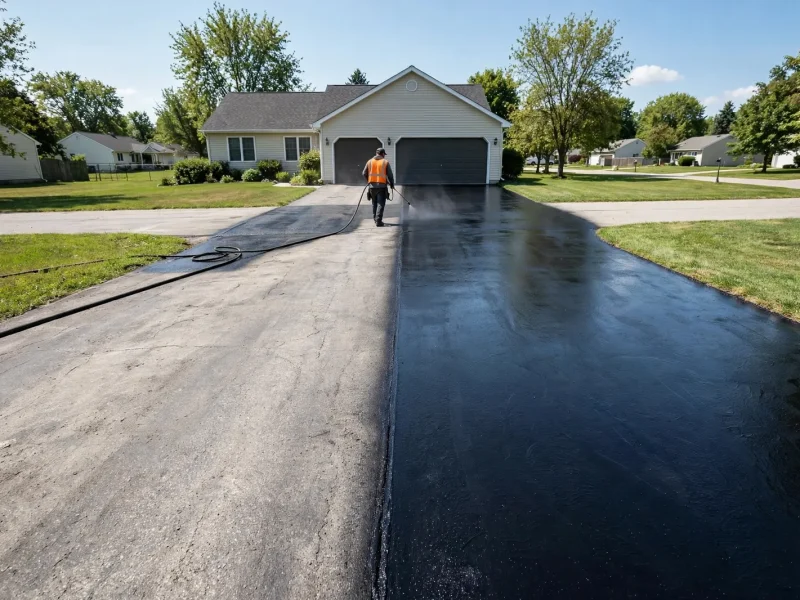
Sealcoating might be the most visual service in the paving business. A faded, gray driveway and a fresh,…
Read MoreShared lead platforms like Angi and HomeAdvisor charge $60-$150 per lead — and that lead goes to 3-5 other contractors. Your close rate on shared leads is typically 8-15%. That’s an effective cost per booked job of $600-$2,000 before you’ve even paid your sales rep.
The alternative — building your own lead generation system — costs $1,500-$5,000/month upfront but produces exclusive leads at $30-$80 each with close rates of 25-40%. Effective cost per booked job: $120-$320.
The math is not close. On cost per booked job, Lead Generation for Contractors done in-house wins by a wide margin.
Own-funnel lead generation for contractors requires four pieces: a fast conversion-optimized website, at least one paid channel (Google or Facebook), a follow-up system (SMS + email automation), and reputation infrastructure (reviews, social proof, trust signals).
Start with one channel. Prove it works. Scale it. Then add the next. Contractors who try to run everything at once end up running nothing well.
Shared lead platforms collect a homeowner’s details once and sell the same enquiry to several contractors at the same time. By the time you call, the homeowner may already have spoken to two or three competitors. Winning the job often comes down to who called first and who dropped their price furthest.
The lead itself is only the start of the cost. Your team spends time chasing people who were never exclusively interested in your company, and conversion rates reflect that. For some companies this still fills gaps in the schedule, but it is rarely a foundation for steady growth.
When a homeowner finds your website, your Google profile, or your ad, and contacts you directly, the conversation starts differently. They chose your company, they have seen your reviews and your work, and no competitor receives the same enquiry at the same moment.
Your own lead generation for contractors also builds assets you keep: a website that ranks, a profile full of reviews, an audience you can retarget, and a list of past customers you can contact again. Marketplace leads stop the moment you stop paying; your own system keeps producing.
Compare the two options on cost per booked job, not cost per lead. A cheap shared lead that converts rarely can cost more per job than a direct enquiry that costs more but converts often. Track how many enquiries become estimates and how many estimates become signed work for each source.
Also count the hidden costs. Chasing low-quality leads uses office time, frustrates sales staff, and can push your best people towards discounting. A fair comparison includes those effects, not just the invoice from the lead seller.
Buying leads is not always the wrong choice. A new company with no online presence may need work while its website and reviews are being built. Seasonal gaps can also justify a short campaign, provided the numbers are watched closely.
The mistake is dependence. If a marketplace raises prices or lead quality drops, a dependent company has no alternative source of work. Treat purchased leads as a temporary supplement while your own system is built, not as the system itself.
Start with the basics that make every channel work better: an accurate Google Business Profile, a steady flow of genuine reviews, and a website with a page for each core service. These assets turn more of your existing visibility into enquiries straight away.
Then add one or two paid channels, such as Google Ads for high-intent searches or Facebook Ads for a strong local offer. Measure cost per booked job from the start so you know which channel deserves more budget.
Lead generation for contractors is ultimately a control decision. Marketplaces rent you access to their audience on their terms. Your own website, profile, and campaigns are assets on your balance sheet that grow more valuable the longer you run them.
If you are ready to build that asset, see how our lead generation services for contractors work, or contact Contractors Marketing Pros to map out a plan for your service area. Resource: For independent research on your local market, see the U.S. Small Business Administration’s guide to market research and competitive analysis at https://www.sba.gov/business-guide/plan-your-business/market-research-competitive-analysis.
Paid advertising can produce enquiries within days of a well-built campaign going live, while organic assets such as rankings and reviews build over several months. Most contractors see the best results from combining both: advertising for near-term work while the website, profile, and review system grow into a dependable source of direct enquiries that lowers the average cost of every job. Plan around both timelines, and your Lead Generation for Contractors strategy stays realistic from day one.
Start by making your direct channels ready to convert: complete your Google Business Profile, put a review request system in place, and make sure your website has a clear page for each core service with an easy way to contact you. Once those basics are in place, shift a portion of your lead-buying budget into your own campaigns and compare cost per booked job before moving more. That measured shift is how Lead Generation for Contractors goes from rented to owned.
One final point on timing: the best time to build your own lead generation system is while work is still coming in from other sources. Building under pressure leads to rushed decisions, while building early gives your website, reviews, and campaigns time to mature before you truly depend on them.
Sealcoating might be the most visual service in the paving business. A faded, gray driveway and a fresh,…
Read More
If you own an asphalt paving company in Florida, you have probably asked the question every contractor asks…
Read More
When a homeowner’s driveway is cracking or a property manager needs a parking lot resurfaced, the search almost…
Read More