
Home Improvement Lead Generation in Miami: Turning Clicks into Estimates
Plenty of Miami home improvement companies do not have a traffic problem. Their ads get clicked, their website…
Read MoreLong before your company is invited to bid, someone has usually visited your website. An owner checking credibility, a developer comparing firms, an architect verifying you can handle the scope — all of them form an opinion from what they find. If the site looks dated, loads slowly, or says little of substance, your company can be cut before your estimating team ever hears about the project.
Construction website design is not decoration. For a builder, the website works like supporting documentation for every bid and referral: it proves capability, shows finished work, and makes it easy for a serious buyer to start a conversation.
This article walks through what a contract-winning construction website actually needs — and what it can safely leave out.

Construction website design helps companies win more contracts by treating the site as a bid-support tool: a clear capability statement, a project gallery organized the way owners think, licensing, safety, and insurance proof up front, fast mobile performance, and an obvious path to submit an RFP. Buyers shortlist firms that look capable; your website is where that judgment happens.
Owners read a construction website the way they read a qualification package: what you build, who you build it for, how large a project you can handle, and whether working with you will be straightforward.
Replace vague claims with a plain capability statement near the top of the site: project types, sectors served, service area, and the size of work you are set up for. A researcher should understand in one screen whether your firm fits their project.
Your audience is owners, developers, property managers, and their advisors — not homeowners hunting for the lowest price. Clear, factual language about scope, process, and communication builds more confidence than superlatives. It is the same discipline behind effective general contractor marketing: say exactly what you do, and let the proof carry the weight.
Every construction company claims quality. The ones that get shortlisted show it. Your project gallery is the most persuasive part of the site when built the way owners actually evaluate work.
Group completed projects by the categories buyers think in — project type, sector, or service — rather than one long undifferentiated list. Each entry should carry a few factual lines: what was built or renovated, the scope, and the challenge solved. Real photos matter more than polish; a genuine jobsite photo tells a researcher more than a stock image ever will.
An out-of-date gallery quietly suggests an idle company. Add completed projects as they finish, and let the gallery show the range of work you want more of. Industry bodies like the Associated General Contractors of America emphasize professionalism in how firms present themselves; your gallery is where that standard becomes visible.
For commercial buyers, risk decides shortlists. Decision-makers look for signs that a firm is licensed, insured, and safety-serious before investing time in a conversation.
Do not bury that proof in a footer or a PDF nobody opens. Give licensing and insurance a clear place on the site, describe your safety program in plain terms, and mention the standards your crews work to. Good construction website design treats these trust signals as core content, not decoration. You do not need to publish documents; you need a researcher to conclude, quickly, that your company is a safe pair of hands.
When proof is easy to find, conversations start further along — the buyer has cleared the basic credibility questions and wants to talk about their project.
A surprising number of construction websites hide the next step: the phone number is small, the form asks for everything or nothing, and there is no clear route for a buyer with plans in hand.
Give RFPs and bid invitations their own obvious path: a visible contact option on every page, a short form asking for the project basics — type, location, timeline, and how to reply — and a direct phone number. Professional website design treats this path as the whole point of the site; everything else exists to bring the right visitor to it.
Buyers research from offices, jobsites, and phones in between. A site that loads slowly or breaks on a phone loses credibility in seconds and hands the shortlist spot to a competitor. Fast pages, readable text, and tap-to-call options are not extras; they are part of how your company is judged. Connect that path to a proper follow-up system, and your lead generation stops depending on someone remembering to check an inbox.
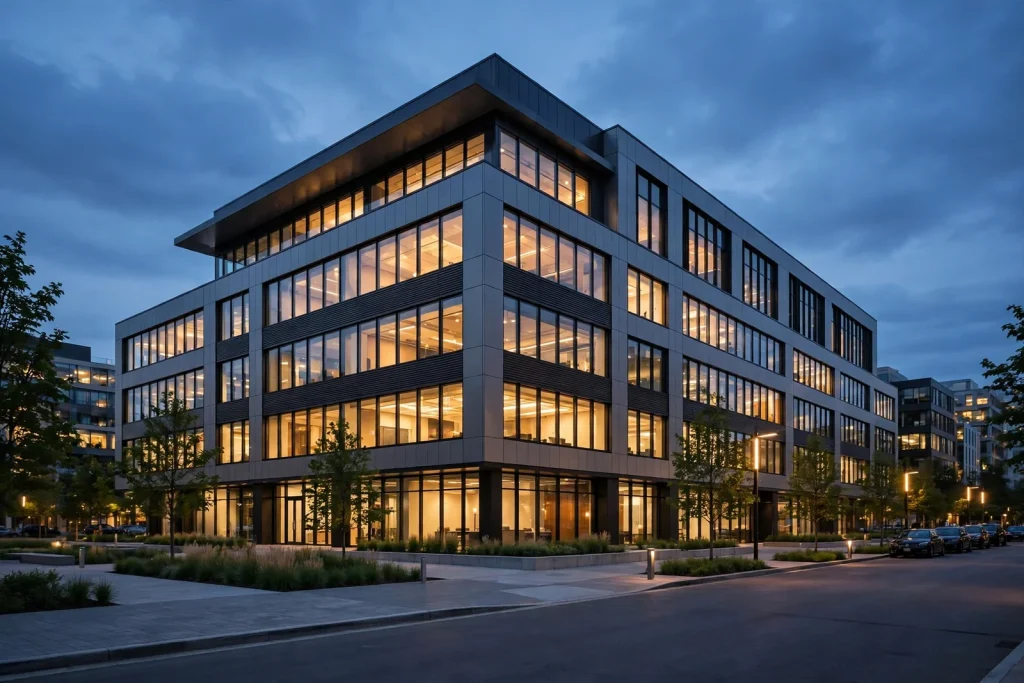
Contractors Marketing Pros is a digital marketing agency devoted entirely to contractors. We design and build websites that work as sales tools for construction companies — structured around capability, proof, and how owners actually choose builders. Headquartered in Miami, Florida, we work with contractors across the United States remotely, so you get a specialist team without a generalist agency’s divided attention. We plan, design, and write your site around one goal: helping the right buyers conclude that your firm belongs on their shortlist, then making it effortless for them to act on it.
Website Design. Our construction website design service builds fast, professional sites around your capability statement, project proof, and a clear RFP and contact path — structured to convert research visits into real conversations with owners and developers.
Generalist web designers build for portfolios; we build for how construction work is won. Because we work only with contractors, we know a construction website must read like a qualification package, perform on a jobsite phone, and support bids as much as generate inquiries. The same team can also manage your search visibility, advertising, and reviews, so your whole presence stays consistent. Reporting is plain-language, and with no long contracts, our work has to keep earning its place — just like yours does.
At minimum: a clear capability statement, pages for your project types and services, a current project gallery with factual descriptions, licensing, safety, and insurance proof, and an obvious contact and RFP path. That is the foundation of effective construction website design: answering the exact questions owners ask before shortlisting a firm.
Add completed projects as they finish, while photos and details are easy to gather. A steadily growing gallery shows an active company, and even a brief entry with real photos outperforms a polished page that is years out of date.
Indirectly, yes. Slow or broken mobile pages frustrate researchers and signal carelessness — the opposite of what an owner wants in a builder — and speed affects search performance too. Fast pages keep your proof in front of buyers instead of losing them to a competitor.
Most construction companies should not: every project is scoped differently, and published numbers invite the wrong comparisons. Buyers need clarity about project types, typical scope, and how your estimating process works. Save numbers for the conversation, where they can be explained.
Yes, because relationships now get verified online. A referred owner or a developer who met you once will still check your site before inviting a bid. A professional website confirms the recommendation instead of raising doubts, and it works for buyers who have never heard your name too.
If your company’s website undersells the work you actually deliver, it is costing you contracts silently. Call Contractors Marketing Pros at (813) 214-1035, message us on WhatsApp, or reach us through our contact page for a free marketing audit. We will review your site the way an owner would and show you what stronger construction website design could do for your pipeline.
Plenty of Miami home improvement companies do not have a traffic problem. Their ads get clicked, their website…
Read More
Referrals built your roofing company, but they were never a system you control. If you want to generate…
Read More
A 3-step Facebook Ads funnel that has generated over 12,000 leads for contractors in the last 24 months.
Read More