Google Business Profile for Contractors: The Setup That Brings Calls
When a homeowner’s roof is leaking or their AC quits on a hot afternoon, they don’t scroll through…
Read MoreContractor marketing is how a contracting business gets found, earns trust, and turns searches and referrals into booked jobs. It is not one tactic. It is a system: a visible online presence, a website that answers questions and captures inquiries, reviews that prove your work, advertising that fills gaps, and follow-up that turns a quote request into a signed job. Together, they produce a steady flow of inquiries from people already looking for help.
Most contractors do not have a marketing problem so much as a consistency problem. The website was built years ago and never updated. The Google Business Profile is unclaimed or half-finished. Reviews exist, but nobody asks for them. Ads run for a month, then stop. Each piece alone does little. Together, they compound: visibility brings clicks, trust turns clicks into calls, and follow-up turns calls into work.
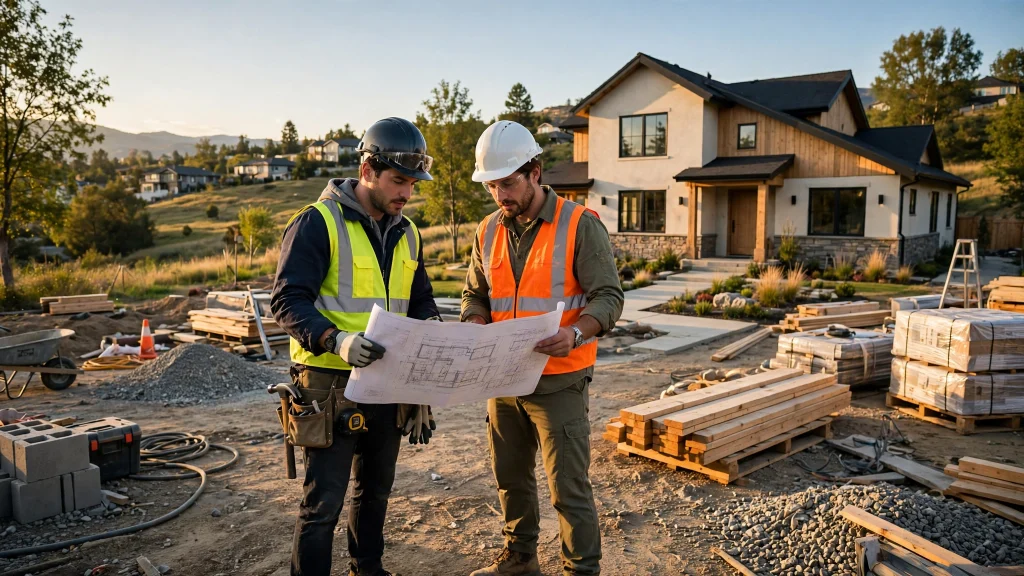
The Short Answer: Contractor marketing works best as a connected system, not a single channel. Start with a complete Google Business Profile and a fast, clear website, collect reviews on every finished job, use paid ads to fill slow periods, stay visible on social media, and follow up every inquiry quickly. Done consistently, this system books more jobs than any single channel alone.
Local search is where most contractor marketing starts, because most customers search for a contractor near them. Google shows a map pack of local businesses before the regular results for these searches. Appearing there puts your business in front of people at the exact moment they need work done.
Your Google Business Profile is the foundation. Claim it, fill in every section, and keep it accurate: services, service area, hours, phone number, and photos of real completed work. Add new photos regularly and respond to all reviews calmly and professionally.
Beyond the profile, local SEO means your website clearly states what you do and where you work, your business name, address, and phone number are consistent everywhere they appear online, and your site earns mentions from local sources such as suppliers and trade associations. This is slow work, but it is the most durable kind of visibility: once you rank well locally, you keep getting inquiries without paying for every click.
Your website is the one marketing asset you fully control, and for contractors it has a single job: turn a visitor into a call or a form submission. The most important information must be obvious within seconds — what services you offer, where you work, and how to contact you. A tap-to-call phone number matters more than a clever headline, because most contractor searches happen on phones.
Include a page for each main service, so a visitor looking for a specific job lands on exactly the right information instead of a generic homepage. Each service page should explain what the service includes, what the process looks like, and what the customer should do next. Use real photos of your own work: customers want evidence you have done this kind of job before.
Speed and simplicity matter too. A slow site, a confusing menu, or a form that asks for too much information will lose inquiries your marketing already paid to earn. Keep the form short — name, phone, service needed, and a brief description.
Reviews are the closest thing to word of mouth that exists online, and for contractors they carry enormous weight. A homeowner choosing between two similar businesses will almost always pick the one with more recent, detailed reviews. Reviews also influence local rankings, so they help you get found as well as chosen.
The mistake most contractors make is waiting for reviews to appear on their own. They rarely do. Build asking into your process: when a job finishes and the customer is happy, ask for a review before you leave, and follow up with a simple link by text or email. Ask when satisfaction is highest — right after the customer has seen the finished work.
Do not buy reviews, write your own, or offer incentives in exchange for positive ratings. Fake reviews get removed, and getting caught damages trust far more than a small number of honest reviews ever could. When a negative review appears, respond politely and take the conversation offline.
Paid advertising — mainly Google Ads and social media ads — is the fastest way to generate inquiries, and it works best as a complement to organic visibility rather than a replacement for it. Google Ads puts you at the top of search results for the services you want, immediately, even while your local SEO is still building. Social media ads reach homeowners who may need work soon but are not actively searching yet.
The key to paid ads for contractors is targeting and tracking. Ads should point to a dedicated page for the service being advertised, not to a generic homepage, and every call and form submission should be tracked back to the ad that produced it. Without tracking, you cannot tell which ads are producing jobs and which are simply spending money. Set a budget you can sustain for at least a few months, because advertising that starts and stops every few weeks never gathers enough data to improve.
Social media will not usually be the first place a homeowner finds a contractor, but it is where trust is built between jobs. Before-and-after photos, short videos of work in progress, explanations of common problems, and answers to questions homeowners actually ask all show competence in a way that an ad cannot. A homeowner who has seen your work for months is far more likely to call you when a problem appears.
The practical approach is simple: post consistently, even if only a few times a week, and show real work rather than generic graphics. A short video explaining why a roof leaks in one spot, or a photo series showing a remodel from demolition to finish, teaches the viewer something and proves you know the trade. Respond to comments and messages, because responsiveness on social media is often read as a preview of responsiveness on the job.
Referrals remain the highest-quality source of contractor work, and marketing should feed them rather than replace them. Every finished job is an opportunity: a satisfied customer, a neighbor who watched the work, or an agent who needs a reliable contractor. A simple follow-up after the job — a thank-you message and a reminder that you welcome referrals — keeps you in mind at exactly the right time.
Repeat business deserves the same attention. Past customers already trust you, and they will need more work over time: maintenance, repairs, additions, or a different property. Staying in touch with a short seasonal message or a helpful reminder costs almost nothing and keeps your business first in mind when the next project comes up. Keep a customer list and use it.
Follow-up is the least glamorous part of contractor marketing and the place where the most jobs are lost. An inquiry that sits unanswered for a day is often an inquiry that has already called your competitor. Speed is frequently the deciding factor, because customers interpret fast response as reliability.
Follow-up also means having a process after the first contact. Confirm the appointment, show up when promised, send the estimate when you said you would, and check in after sending it. Many estimates are lost not because of price, but because nobody followed up. For example, following up an estimate a few days after sending it closes more work than sending it and waiting. The habit is simple: every inquiry gets a response the same day, every estimate gets a follow-up, and every finished job gets a review request.
Contractors Marketing Pros works with contractors across the United States, remotely, building the marketing system described in this guide. The agency’s services include local SEO for your Google Business Profile and local search visibility, contractor website design for sites that turn visitors into calls, and Google Ads management for inquiries while organic visibility grows.
If your marketing is scattered, the agency can help you put the pieces together into one system that keeps working month after month. Every service is built for contractors specifically, not adapted from a generic marketing template.
Contractor marketing is the set of activities a contracting business uses to attract customers and win jobs: local SEO, a professional website, online reviews, paid advertising, social media, referrals, and follow-up. Its goal is a steady flow of inquiries from people who need the contractor’s services.
It depends on the channel. Paid ads can generate inquiries within days of launching, while local SEO and organic visibility typically build over several months of consistent work. Running several channels together gives the most reliable results.
Yes. Even referred customers usually search for the business online before calling, and they judge credibility by what they find. A clear website with real photos and an easy way to contact you turns referrals into booked jobs.
There is no single most important part — that is the point. Visibility without trust does not convert, and trust without visibility is never seen. If you must start somewhere, start with a complete Google Business Profile and an easy-to-contact website.
It depends on time and skill. A contractor with a few free hours a week can manage a profile, reviews, and social media personally. An agency makes sense when job-site work keeps pushing marketing aside. Either way, the system only works if someone owns it consistently.
Contractor marketing is not about finding one magic channel. It is about building a system — visibility, trust, and follow-up — and running it consistently until inquiries become routine. Start with the foundations, add channels one at a time, and measure what produces real jobs, not just clicks.
If you want help building that system, Contractors Marketing Pros can help. Call +1 (813) 214-1035, reach out on WhatsApp, or visit the contact page to start the conversation. Your next booked job could come from the marketing you set up today.
When a homeowner’s roof is leaking or their AC quits on a hot afternoon, they don’t scroll through…
Read More
The Google Ads playbook we use to drop cost per lead from $200+ to under $50 for our…
Read More
If you run a paving company, you have probably asked the Google Ads vs Facebook Ads question more…
Read More