
Marketing Services for Roofers: The Complete Guide to Booking More Roofing Jobs
Most roofing companies do not have a work problem. They have a visibility problem. Roofs leak, shingles age,…
Read MoreSolar is not an impulse purchase. A homeowner gets your quote, then life happens: they compare other installers, wait on a partner’s opinion, and often go quiet for months before coming back. That is exactly why email marketing for solar companies matters so much. The sale rarely goes to the first company that quoted; it goes to the company that is still helpfully present when the homeowner finally decides.
Most solar companies lose deals in this follow-up gap. A consultant sends the proposal, makes one or two calls, and then the lead goes cold because the team moves on to fresh inquiries. A simple, permission-based email system closes that gap: it keeps your company in the inbox, answers the questions that stall decisions, and brings people back to a consultation when the timing is right for them.
This guide covers how to build that system: a list you have permission to email, a follow-up sequence for open quotes, nurture emails for past customers, and the legal basics that keep your program welcome instead of spam.
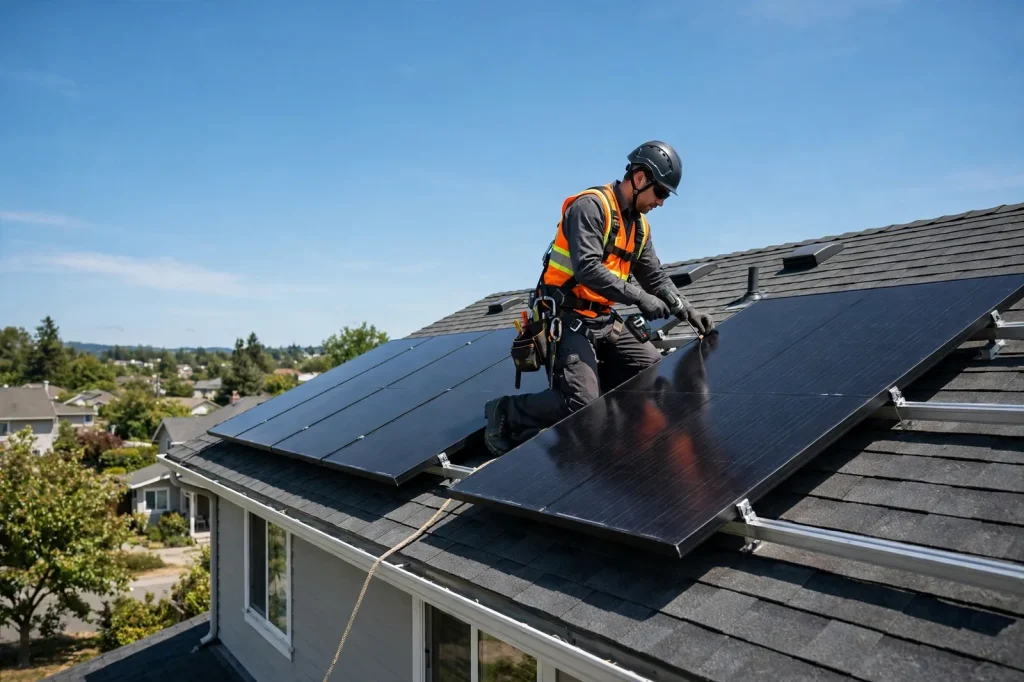
Email marketing for solar companies works by keeping every open quote and past customer in a structured, permission-based follow-up system. Because solar decisions take weeks or months, scheduled check-ins, educational emails that answer common questions, and seasonal reminders keep your company top of mind until the homeowner is ready. The goal is not pressure; it is making sure your quote is the one they come back to.
Think about what happens to a typical open quote. The homeowner met your consultant, liked the presentation, and said some version of “we need to think about it.” Every week without contact after that, the details of your proposal fade and other household priorities take over.
Manual follow-up cannot fix this at scale. Consultants are busy running new appointments, and follow-up lists get abandoned in busy months. Automation fixes the structure of the problem: the moment a quote is issued, a sequence of emails is scheduled, so every prospect gets consistent, polite follow-up.
Email also fits how homeowners actually decide. An email can be re-read, forwarded, and searched for months later in a way a voicemail cannot. When a neighbor asks who they are considering for solar, your last helpful email is right there with your name on it. This is core to complete solar company marketing, not a side tactic.
In short, email marketing for solar companies works best when every quote gets a helpful, well-timed follow-up.
Everything starts with permission. Your email list should be built from people who gave you their email address and a reason to use it:
A few disciplines keep this list valuable. Tag contacts by where they came from and where they are in the buying process, because a new quote and a three-year customer should not get the same emails. Remove bounced addresses, honor unsubscribes immediately, and never buy lists: purchased lists have no permission and damage the sender reputation your real emails depend on.
This permission-based approach also makes email work well alongside your broader lead generation efforts. Leads arrive with context; email keeps them warm long enough to become installations.
You do not need a complicated funnel. A short, well-timed sequence covering the first several weeks after a quote, followed by a slower monthly rhythm, will do most of the work. This sequence is the backbone of email marketing for solar companies:
Sent a few days after the proposal, this email is short and human: thank them, confirm they received everything, and invite questions. Its job is to reopen the conversation while the consultation is still fresh.
A week or so later, send education instead of a nudge. Explain, in plain language, the topics homeowners get stuck on: how net metering works in general terms, what the installation timeline looks like from contract to permission to operate, how monitoring shows their system’s production, and what maintenance a system actually needs.
Later in the sequence, address the practical blockers directly. Financing is the big one for many households: describe, in general terms, that options exist and terms vary, and invite them to walk through specifics with your team rather than quoting figures in an email. Incentive questions deserve the same care: programs, tax rules, and eligibility change and depend on the homeowner’s situation, so point readers to official sources and their own tax professional rather than printing numbers that may not apply to them.
Not everyone decides in the first month. After the initial sequence, move open quotes to a monthly email: a seasonal note, a short explainer, or a project spotlight describing a recent installation in general terms. Example: a homeowner who quoted in spring and went quiet may resurface in the fall after a summer of high bills, and the company that emailed helpfully all summer gets the call.
Your installed base is an asset most solar companies underuse. Past customers already trust you, know the quality of your work, and talk to neighbors who are watching their rooftop and asking questions. A light, steady email rhythm keeps that asset working:
Keep these emails genuinely useful; a couple a year per topic is plenty. The goal is presence, not volume.
Email is regulated, and the rules are not optional. In the United States, commercial email must comply with the CAN-SPAM Act. The practical basics every solar company should follow:
For the authoritative version of these rules, read the FTC’s CAN-SPAM Act compliance guide for business and build your program to match it. There is also a commercial reason to do this right: emails people asked for, that say true things, get read, replied to, and forwarded. Everything else trains inboxes to file you under spam.
Contractors Marketing Pros is a marketing agency that works exclusively with contractors and home service companies in the United States, serving clients remotely from Miami, Florida. Our Lead Generation service rests on a simple principle: a lead is only worth what your follow-up makes of it. For solar companies, that means systems that capture inquiries properly, organize them by stage, and keep every open quote inside a consistent follow-up rhythm instead of a consultant’s memory.
We help you set up email marketing for solar companies as part of that system: the permission-based list structure, the quote follow-up sequence, and the nurture emails that keep referrals and repeat work coming in. If too many of your quotes go silent, the fix is rarely more leads. It is almost always better follow-up, and that is what we build.
Follow a short sequence in the first several weeks after the quote, then settle into roughly one helpful email a month. Always honor unsubscribes immediately.
Yes, if they provided their email address for quote follow-up. Keep emails relevant to their inquiry, identify your business clearly, include your physical address, and provide a working unsubscribe option in every message, as CAN-SPAM requires.
They should answer the questions that stall decisions: how the process and timeline work, what maintenance involves, how monitoring shows production, and where to get specifics on financing and incentives. Educational emails build more trust than repeated “just checking in” messages.
Do not print specific figures. Programs, amounts, and eligibility vary by homeowner and change over time, so specific numbers in an email can mislead and create compliance problems. Refer readers to official program resources and their own tax professional for current details instead.
Measure email marketing for solar companies by replies, re-booked consultations, and signed contracts that trace back to the sequence, not just open rates. When a homeowner who went quiet for two months replies to a monthly email and rebooks, that is the metric that pays.
Tired of watching good quotes go quiet? Call Contractors Marketing Pros at (813) 214-1035, message us on WhatsApp, or reach out through our contact page. We will show you how structured follow-up turns the quotes you already have into installations.
Most roofing companies do not have a work problem. They have a visibility problem. Roofs leak, shingles age,…
Read More
Most electrical companies are invisible between jobs. You finish a panel upgrade, the customer is thrilled, and then…
Read More
The 12 must-have elements of a high-converting contractor website — and how they combine to drive 3-5x more…
Read More