
Social Media Marketing for Electricians: Simple Posts That Win Work
Most electrical companies are invisible between jobs. You finish a panel upgrade, the customer is thrilled, and then…
Read MoreWhen an air conditioner dies during a heat wave, the homeowner does not browse. They search, they tap one of the first results, and they call. Google Ads for HVAC companies exist for exactly that moment. Run well, they put your company at the top of the page when a local homeowner needs help now. Run badly, they burn budget on browsers, job seekers, and people three counties away.
The difference is structure. Most underperforming HVAC ad accounts were set up as one big campaign with a pile of keywords and a link to the homepage. This guide walks through the fix: separate campaigns by intent, disciplined keywords and ad copy, landing pages that match the search, seasonal budget shifts, and the speed-to-lead habits that decide who wins the job.
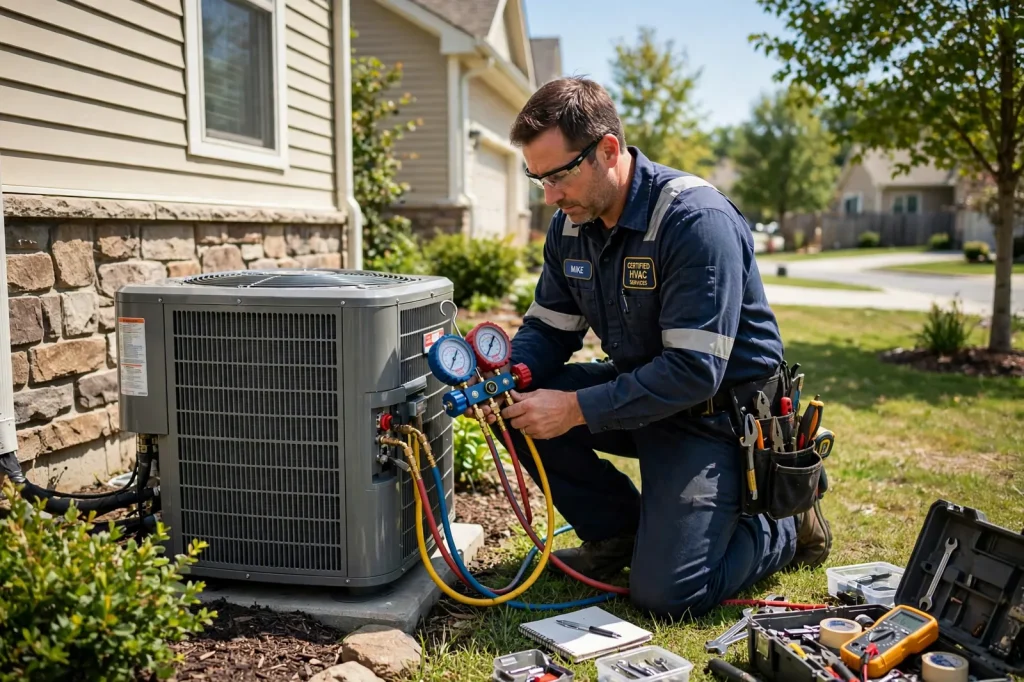
Google Ads for HVAC companies work best when the account is split into separate campaigns for emergency repair, system replacement, and maintenance, because each search has a different intent and a different job value. Pair that structure with matched keywords, ad copy that names your service area and licensing, landing pages built for the exact service searched, call tracking on everything, and a budget that rises with heat waves and cold snaps. Then win the job by answering faster than your competitors.
Think of HVAC marketing like dispatch: the right tech, with the right tools, sent to the right kind of call. Organize your ad account the same way: campaigns are the trucks. Each one carries keywords, ads, and a budget for one category of work, pointed at one kind of landing page.
This structure does three things. It lets you control budget by job type, so a surge in repair searches does not starve your replacement campaigns. It makes your ad copy speak directly to the search, which raises relevance and response. And it makes reporting honest: you see what each click type costs and which ones turn into booked jobs.
Geography belongs in the structure too. Build campaigns around the area you genuinely serve, and no larger. Every click from outside your service area is money spent on a job you would never run.
These three categories behave differently, and mixing them in one campaign muddles all of them.
Repair searches are urgent and specific: “AC not cooling,” “furnace repair near me,” a homeowner who needs someone today. These campaigns should be tight: exact service keywords, your real service area, and ad copy built around fast response and availability. Send them to a repair landing page with a phone number that cannot be missed.
A homeowner searching for a new system is making a much bigger decision than a repair customer. These searches mention equipment, installation, and replacement, and the person is comparing two or three companies. The campaigns deserve their own budget, their own copy that speaks to estimates, warranties, and financing options if you offer them, and landing pages that explain your installation process.
Maintenance searches are lower urgency and seasonal. They are valuable because a tune-up visit puts your tech in the home, your sticker on the unit, and your company first in line when that system eventually fails. Run these campaigns hardest in the shoulder seasons, when homeowners are thinking ahead instead of reacting to a breakdown.
Keyword discipline is where budgets live or die. Build your keyword lists around services plus location intent: the service, the problem, and the area. Keep match types under control, review your search terms regularly, and add what converts. Just as important is the negative keyword list, the terms you refuse to pay for. Cut searches about jobs and careers, DIY repair instructions, parts and supplies, brands you do not service, and services you do not offer. Every week you skip this cleanup, you pay for someone’s homework project.
Ad copy should read like a promise you can keep. Mention the service, the area you serve, and your licensing and insurance if you carry them, because those details build trust fast. Talk about fast response only if your team actually delivers it. Avoid superlatives you cannot prove and discounts you do not really offer. A homeowner picks the ad that sounds like a real, qualified local company, not the one shouting loudest. That discipline is what makes Google Ads for HVAC companies profitable instead of expensive.
The click is only half the job. When someone taps your ad, they should land on a page about exactly what they searched for: the repair page for repair searches, the replacement page for replacement searches. The headline should match the ad, the phone number should be visible without scrolling, and the page should load fast on a phone, because most of these searches happen on phones.
Sending every ad to your homepage is the most common and most expensive mistake in Google Ads for home services. The homeowner has to hunt for the right service, wonder if you serve their town, and find your number. Many will not bother; they will hit the back button and call the next company, and you paid for the privilege.
HVAC demand follows the weather, and your budget should too. The way we approach Google Ads for HVAC companies is to plan the year around your climate instead of spreading the same spend across every month.
Push budget up during heat waves and cold snaps, when breakdowns spike and homeowners search with urgency. Those are the weeks your competitors are busiest and sometimes slowest to manage their ads, which is your opening. In the shoulder seasons, ease back on emergency repair and shift weight toward maintenance campaigns and replacement estimates, the work that fills the schedule before the rush. Keep the account active year-round rather than switching it off, because pausing costs you history, data, and momentum.
In short, Google Ads for HVAC companies work best when every campaign points homeowners toward a fast, easy call.
The uncomfortable truth about paid search: the ad only creates the opportunity. Your response wins or loses the job. A homeowner with no air conditioning often calls two or three companies and books the first one that answers and gives a time. If your ad clicks go to a phone that rings out during lunch, your ad spend is subsidizing your competitors.
Set up call tracking and call recording on every campaign. Tracking tells you which campaigns, keywords, and ads produce actual calls instead of empty clicks, so budget follows evidence. Recording, where permitted, tells you how those calls were handled, where many won and lost jobs are hiding.
Then fix the follow-through. Make sure someone owns answering, return missed calls immediately, and treat form submissions like live leads, because the homeowner who filled out your form also filled out someone else’s. This is where advertising connects to the wider lead generation system: fast, consistent follow-up turns the same ad budget into more booked jobs. The best-structured account in the world cannot outrun a five-hour callback.
Contractors Marketing Pros manages Google Ads for contractors across the US, and our Google Ads Management service is built on the structure in this guide. We separate campaigns by intent, write copy grounded in your real service area and credentials, build landing pages that match the search, and install call tracking so every budget decision is based on calls and booked jobs, not clicks.
Our approach to Google Ads for HVAC companies is transparent and practical. You see where the money goes, what it produces, and what we are changing next. No inflated promises, no mystery reports, just an account managed like the revenue tool it should be.
Resource: Google Ads Help
There is no fixed price for Google Ads for HVAC companies, because you set your own budget and costs per click vary by market, season, and competition. The right starting point is what a booked job is worth to you: decide what you can pay to win a repair or replacement and still profit, then budget to fit. Track cost per booked job, not cost per click, to judge whether the spend is working.
Yes, but not at the same intensity all year. Demand peaks with extreme weather, so budgets should rise during heat waves and cold snaps and shift toward maintenance and replacement campaigns in the shoulder seasons. Keeping campaigns active year-round preserves your account history and data, so you are not starting cold when the rush hits.
Google Ads are the standard text ads where you bid on keywords and pay per click, with full control over copy and keywords. Local Services Ads are a separate Google program for eligible home services trades, shown above regular ads, where you generally pay per lead and display a Google badge after passing license, insurance, and background checks. Many HVAC companies run both, using each where it fits best.
Ads can begin showing as soon as a properly built campaign is live and approved, but lead volume depends on your market, budget, season, and how competitive the searches are. The first weeks are best treated as data gathering: which keywords produce calls, which hours convert, and where budget is wasted. Judge the program on booked jobs over a season, not on the first few days.
Clicks without calls point to a mismatch after the click: ads sending people to a homepage instead of a service page, a slow mobile page, no visible phone number, or keywords that attract researchers instead of buyers. Check your search terms for junk, tighten the match between ad and landing page, and make calling effortless. If calls come in but jobs do not get booked, listen to the recordings and fix the follow-up.
Ready to turn Google searches into booked HVAC jobs instead of wasted clicks? Talk to Contractors Marketing Pros about an account built around your services, your area, and your seasons. Call us at (813) 214-1035, message us on WhatsApp, or reach out through our contact page to get started. If you want Google Ads for HVAC companies managed around booked jobs, not clicks, book a free marketing audit.
Most electrical companies are invisible between jobs. You finish a panel upgrade, the customer is thrilled, and then…
Read More
A homeowner thinking about repainting a kitchen or the outside of a house rarely starts by calling painters.…
Read More
Every time a hailstorm rolls through Dallas–Fort Worth, thousands of homeowners grab their phones and search for a…
Read More